
The continued expansion of offshore wind generation across the UK is creating an increasing requirement for specialist wind farm cable route drainage. While much of the attention naturally focuses on the turbines themselves, bringing renewable electricity ashore and connecting it into the National Grid requires the construction of substantial underground cable routes, often extending for many kilometres across agricultural land.

At William Morfoot Ltd, we specialise in the design and installation of land drainage and water management solutions for major cross-country infrastructure projects. With extensive experience working on large-scale cable routes, pipelines and civil engineering schemes throughout the UK, our teams understand the particular drainage challenges associated with constructing underground infrastructure through agricultural land.
Why is wind farm cable route drainage important?
Modern offshore wind farm cable routes can cross a wide range of landscapes, soil types and existing drainage systems before reaching their grid connection point.
The construction corridor required to install underground cables can inevitably interact with existing agricultural drainage systems. Cable Trenches may intersect field drains, construction traffic can affect drainage systems and soil structure, and temporary haul roads and working areas can alter the way water moves through the ground. Furthermore, the general disruption and disturbance to soils as a result of the trafficking and excavation activity will unquestionably affect and damage the natural structure of the soils – meaning that natural cavities and airways within the soil are destroyed – in turn affecting drainage credentials in both the short and long term.
Effective drainage therefore needs to be considered throughout the project lifecycle – rather than simply as part of the final reinstatement process.
Before the main cable installation begins, drainage works can be required to intercept existing systems, manage incoming groundwater and provide suitable conditions for construction, which may also require consent under land drainage byelaws or an environmental permit from the Environment Agency. Once cable installation and the associated civil engineering works are complete, attention then turns towards reinstatement. The objective is to ensure that the land returned to the landowner has an effective drainage system capable of performing for many years to come.
Pre-construction cable route drainage
Good drainage planning begins well before machinery arrives on site. The survey and design process is of critical importance and it ensures that all the existing factors are understood and properly accommodated within the project design. The purpose of the survey & design s to bring together existing site information and to then link this with the requirements of the project – in terms of the new underground apparatus being installed. Clearly new buried services cannot be installed at depths or levels which compromise the ability of the land drainage system to work on an effective basis.
Where cable routes cross productive agricultural land, understanding the existing drainage infrastructure is particularly important for effective wind farm cable route drainage. Many fields contain systems installed several decades ago for which detailed drainage records may no longer exist.
Our experience in agricultural land drainage allows us to identify how these systems are likely to function and develop appropriate solutions where they interact with the proposed construction corridor.
- Investigation and assessment of existing drainage systems
- Drainage surveys and design
- Installation of interceptor drains
- Management of drains crossing the construction corridor
- Temporary drainage measures
- Groundwater and surface water management
- Understanding long term jetting requirements on land drainage systems
- Preparation of drainage plans for subsequent reinstatement
This early involvement can significantly reduce drainage problems during the main construction phase and provides a clear strategy for reinstating the land afterwards.

Post-construction wind farm cable route drainage and agricultural reinstatement
Post-construction wind farm cable route drainage is one of the most important stages of agricultural land reinstatement following cable installation.
A cable route can potentially interrupt drainage systems extending far beyond the immediate construction corridor. A single severed or poorly reinstated drain may influence water management across a much larger area of a field.
For this reason, post-construction drainage should be approached as a specialist engineering discipline.
William Morfoot Ltd can design and install new drainage systems that integrate with remaining infrastructure while taking account of field levels, soil characteristics, existing outfalls and the finished profile of the reinstated land.
Using modern surveying equipment, GPS technology and digital drainage design, our team can establish accurate drain positions, levels and gradients. This information can then be transferred to specialist drainage machinery to achieve precise installation on site.
The result is a drainage system designed around the specific conditions encountered along the route rather than relying upon a generic solution.
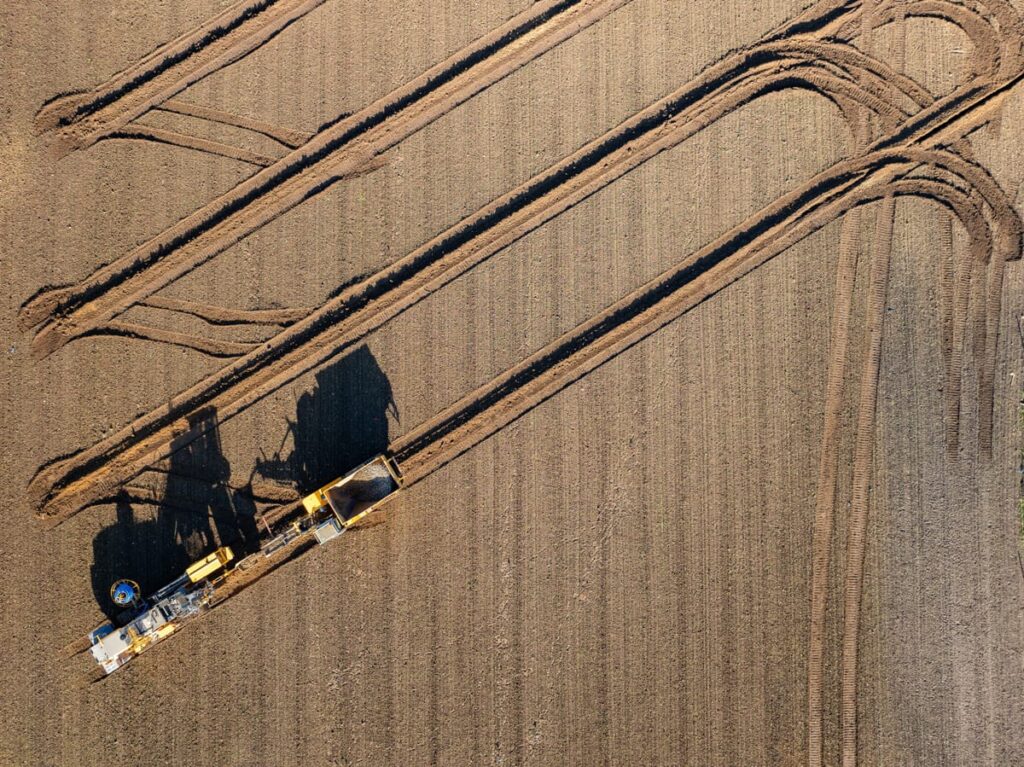
Experience delivering wind farm cable route drainage on major projects
Large renewable energy projects require considerably more than the ability to install drainage pipes.
Contractors must operate safely within complex construction environments, coordinate their activities with multiple other subcontractors and respond to changing programmes while maintaining consistently high standards of documentation, communication and compliance.
William Morfoot Ltd has substantial experience of operating within these environments.
Our work on major UK infrastructure schemes has involved delivering drainage across long construction corridors, multiple landholdings and widely varying ground conditions.
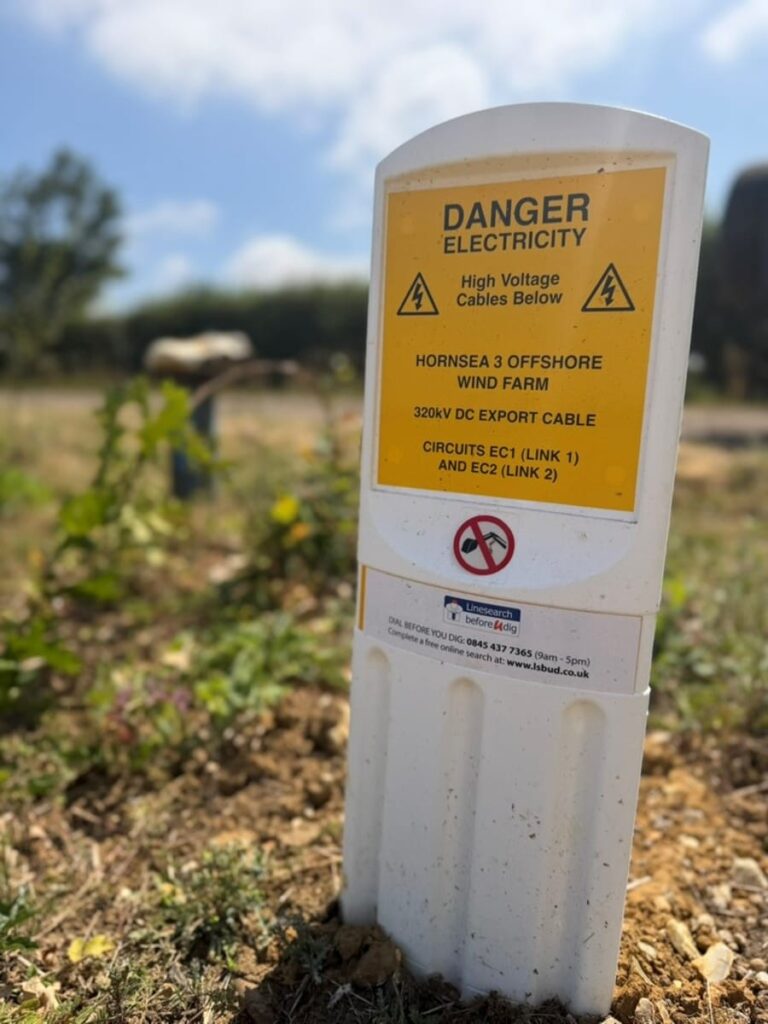
Most recently, William Morfoot Ltd completed the pre and post-construction land drainage programme associated with the Hornsea 3 offshore wind farm onshore cable route.
Our involvement began with drainage design work in autumn 2022 and continued through the construction programme until 2026.
The Hornsea 3 onshore cable route extends for more than 50 kilometres across Norfolk and passes through land belonging to 84 separate landowners. Our teams were responsible for designing and implementing the pre-construction and post-construction agricultural drainage requirements associated with the route.
This required close collaboration with the wider project team and careful coordination with the numerous construction activities taking place across the project.
Experience gained from projects of this scale provides an invaluable understanding of the practical challenges involved in delivering drainage successfully on major renewable energy infrastructure.
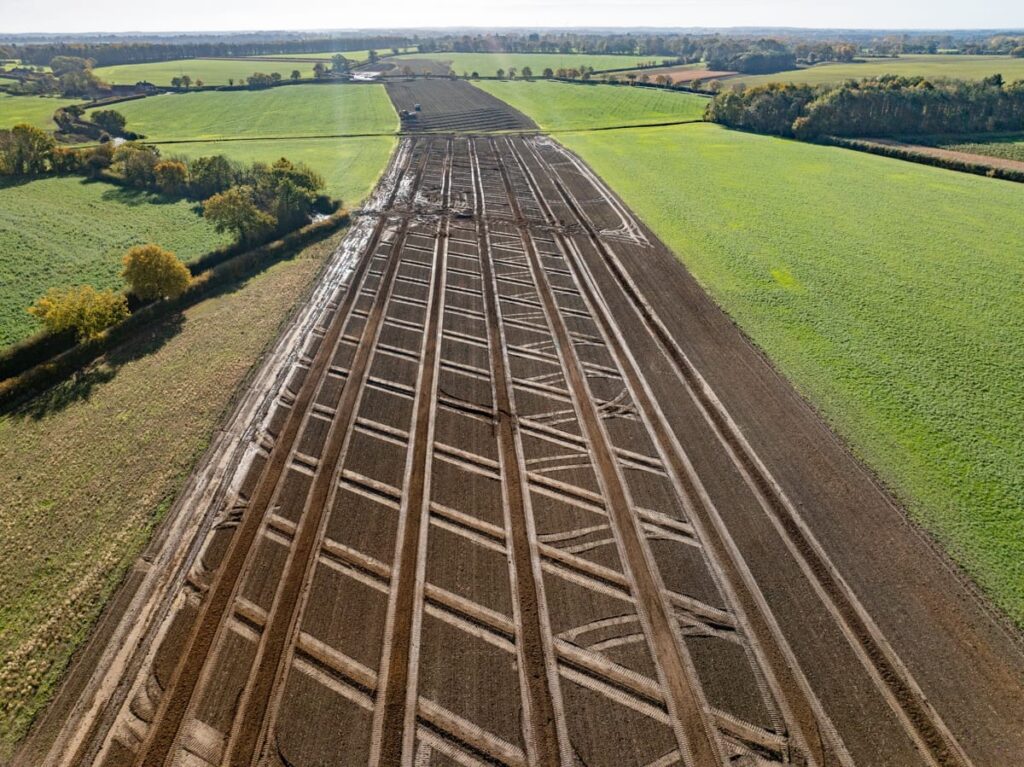
Safety and Compliance at our core
Working on construction sites with multiple contractors present can present obvious and significant safety concerns. With the added complexity of working in and around existing buried utilities, working at depth beneath the soil and also working with water, there is a complex array of safety risks to manage and work amongst.
William Morfoot Ltd are extremely proud to have developed a disciplined culture within our business towards health and safety. Training, staff development, communication, technology and the most modern equipment and working techniques have ensured that we are widely regarded as being leaders in our field at what we do.
Our safety record speaks for itself, but we recognise that there is no room for complacency and we are therefore on a journey of continuous improvement. Our team meets regularly to discuss how we can improve and do things better and we work with many partners to develop our systems of work to ensure that we can provide the best a safest possible way of delivering our projects.
Protecting agricultural land following cable construction
For farmers and landowners, the quality of reinstatement is critically important.
Cable routes are temporary construction sites, but the agricultural land through which they pass needs to remain productive for decades after construction teams have left.
Poor drainage can result in waterlogging, delayed cultivations, soil structural damage, reduced crop establishment and ultimately lower agricultural productivity.
Well-designed drainage helps mitigate these risks.
Our agricultural heritage gives William Morfoot Ltd a particularly useful perspective when working on cable route projects. We understand both the requirements of the principal contractor and the expectations of the farmer or landowner who will ultimately take the land back into production.
That combination of civil engineering experience and specialist agricultural drainage knowledge allows us to develop practical solutions which consider the long-term performance of the land.
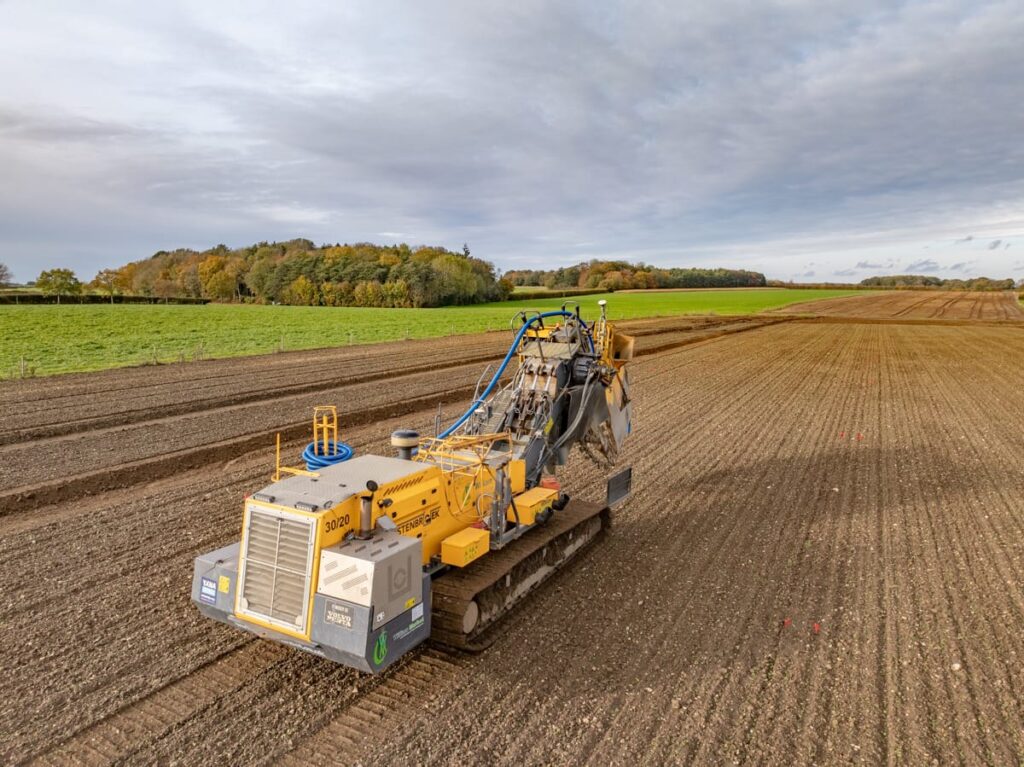
Specialist wind farm cable route drainage contractors
Established in 1962, William Morfoot Ltd has more than six decades of experience in land drainage and water management.
Today, we combine that experience with modern surveying, GPS positioning, digital design and specialist installation equipment to deliver drainage solutions for some of the UK’s largest infrastructure projects.
Our capabilities include agricultural land drainage, pre-construction drainage, post-construction drainage reinstatement, cross-country pipeline drainage, underground cable route drainage and wider water management solutions.
We are accustomed to working alongside Tier 1 contractors and multidisciplinary project teams where safety, environmental performance, programme management and communication are fundamental to successful delivery.
For major cable routes in particular, early engagement with a specialist drainage contractor can provide significant benefits. It allows drainage requirements to be incorporated into construction planning from the outset and provides continuity between pre-construction works and final agricultural reinstatement.
Planning a wind farm or renewable energy cable route?
The UK’s transition towards renewable energy will require substantial investment in the infrastructure needed to connect new generation capacity to the electricity network.
As new offshore wind farms and other renewable energy projects are developed, the successful construction and reinstatement of their onshore cable routes will remain an important part of project delivery.
William Morfoot Ltd provides specialist wind farm cable route drainage services throughout the UK, supporting principal contractors, developers and infrastructure partners from initial drainage assessment and design through to installation and final reinstatement.
If you are planning an onshore cable route and would like to discuss its land drainage or water management requirements, contact the William Morfoot Ltd team.
Early involvement allows us to review the proposed route, identify potential drainage challenges and develop a practical strategy to support both construction and the long-term reinstatement of the land.