
Waterlogged farmland is one of the most visible signs that a field is struggling to manage excess water. Standing water, saturated soils, poor crop establishment and areas that remain wet long after surrounding land has dried can all indicate an underlying drainage problem.
While exceptionally heavy rainfall can overwhelm almost any soil temporarily, persistent waterlogging is often a symptom of a wider issue. Understanding why water is accumulating is the first step towards identifying the correct solution.
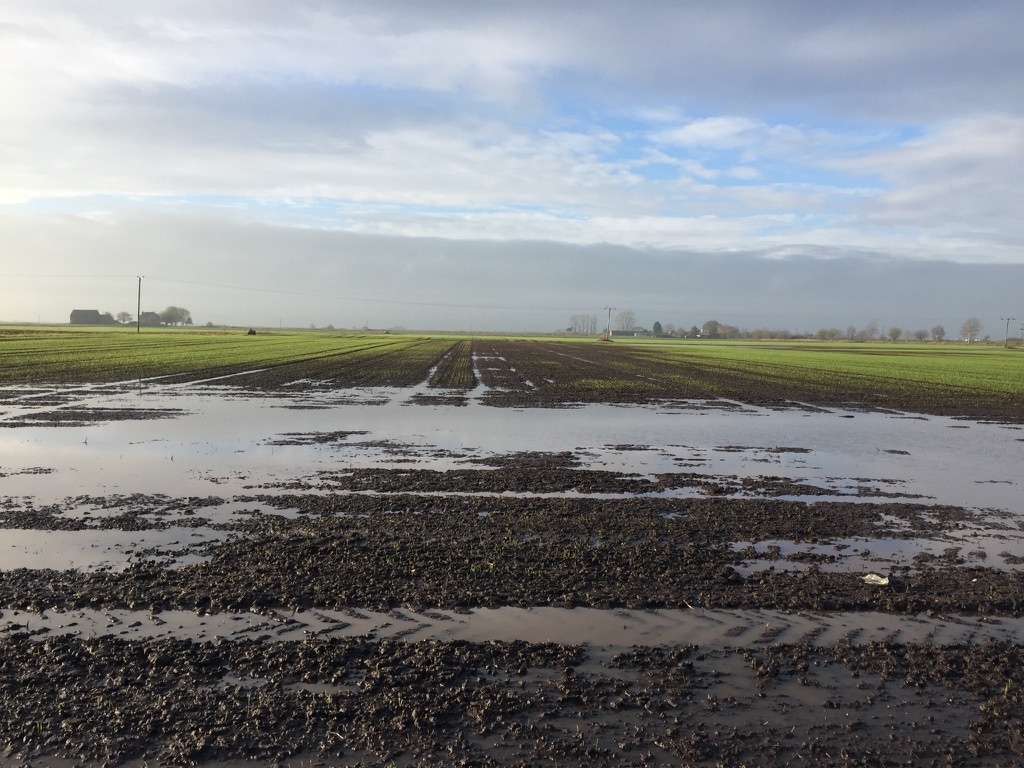
Standing water across agricultural land is often the clearest indication that excess water is unable to move effectively through the soil profile.
At William Morfoot Ltd, we have specialised in agricultural land drainage and water management since 1962. Our experience has shown that whilst ponding, flooding and standing water are obvious symptoms of poor drainage, there are also a range of more subtle signs that crops are under stress from excess water. Effective drainage starts with understanding the land, the soil and the existing drainage infrastructure before deciding what remedial work is required.
What causes waterlogged farmland?
Waterlogging occurs when water enters or remains within the soil faster than it can naturally drain away. Once the pore spaces within the soil become filled with water, oxygen levels decline and conditions become increasingly difficult for healthy root development.
There are several common reasons why this happens.
Heavy or prolonged rainfall
Periods of sustained rainfall inevitably increase pressure on agricultural drainage systems. Once soils reach field capacity, additional rainfall needs to move either across the surface or down through the soil profile.
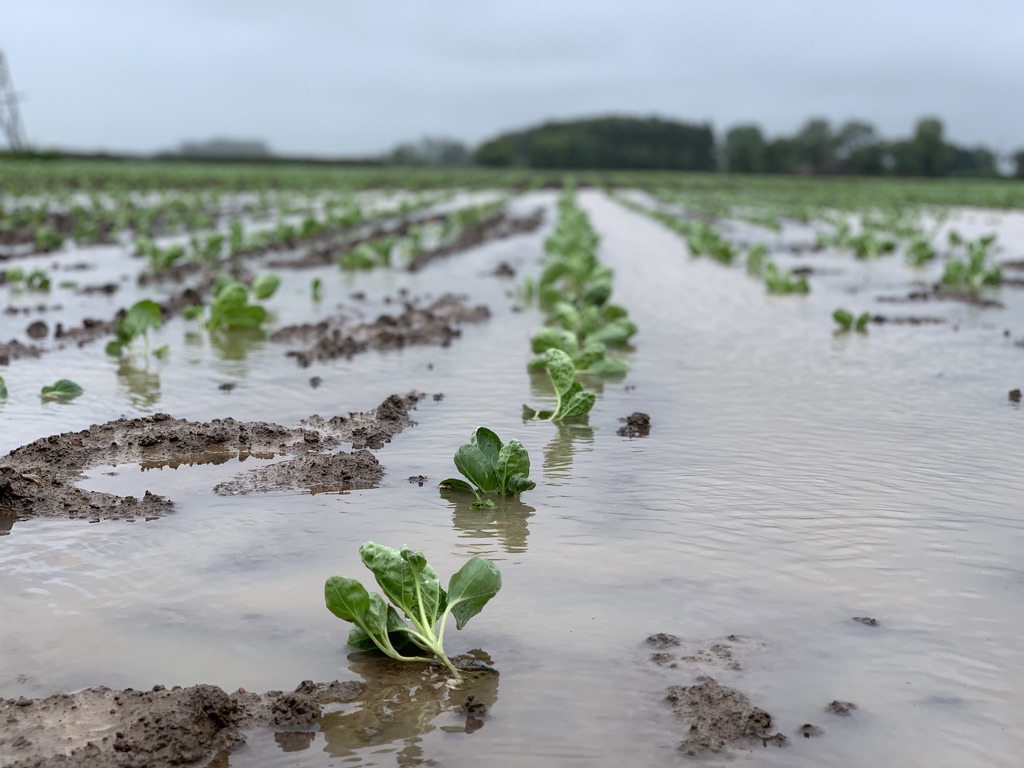
A well-drained field should be capable of moving this surplus water towards an appropriate outfall. Where drainage is inadequate, damaged or simply no longer performing effectively, water can remain within the soil for considerably longer.
Ageing or failing land drainage systems
A significant proportion of Britain’s agricultural drainage infrastructure was installed many decades ago.
Older systems can deteriorate through collapsed or damaged pipes, sediment accumulation, root ingress, iron ochre and blocked outfalls. In other situations, drains may still be functioning but simply be too widely spaced to provide the drainage intensity required by modern farming systems.
The fact that a field has an existing drainage system does not necessarily mean that it is still draining effectively.
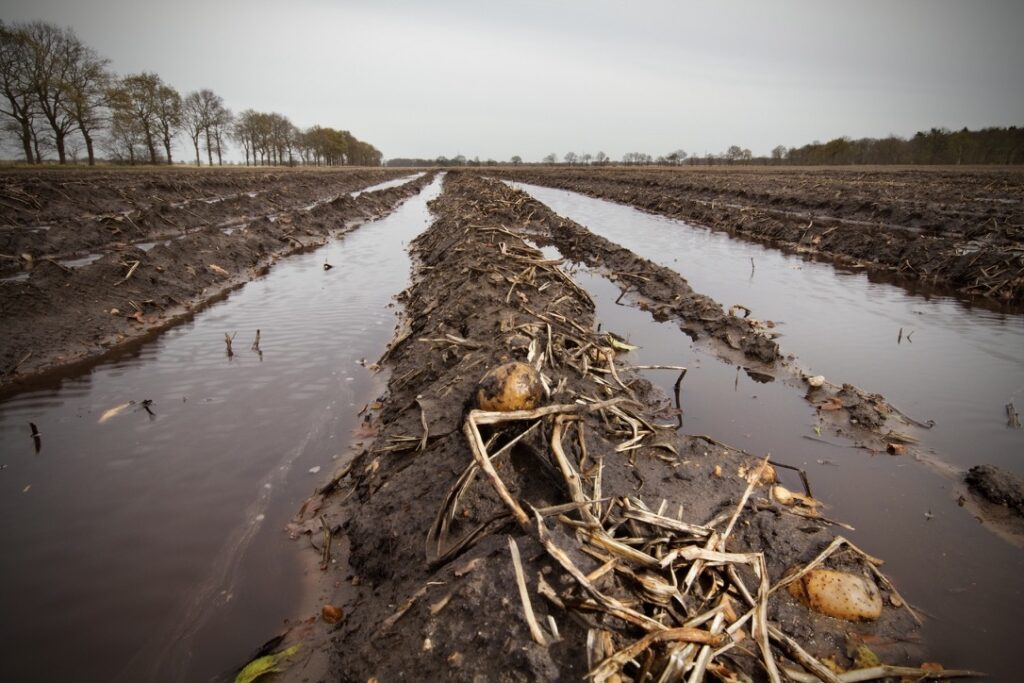
Severe saturation between crop rows demonstrates how quickly productive land can become compromised when drainage capacity is insufficient.
Soil compaction and damaged soil structure
Drainage pipes can only remove water that is able to reach them.
Compacted soils restrict the natural downward movement of water through the soil profile. Heavy machinery, trafficking in wet conditions and repeated cultivations at similar depths can all contribute towards compaction and the development of restrictive layers.
This is why diagnosing a wet field requires more than simply looking at where water is standing on the surface.
The underlying drainage system may be functioning, but poor soil structure could be preventing water from reaching it. Equally, improving soil structure alone will not solve the problem where there is nowhere for surplus water to go.
Inadequate or poorly maintained drain outfalls and perimeter ditch systems
Every drainage system ultimately needs somewhere for the water to discharge.
Ditches, watercourses and other outfalls therefore form a critical part of agricultural water management. Vegetation, accumulated sediment, collapsed banks or insufficient outfall depth can restrict discharge and consequently reduce the effectiveness of an otherwise serviceable field drainage system. Maintenance work affecting ditches and watercourses can also fall within the scope of the Environment Agency’s flood risk activity permit rules, so it is worth checking whether consent is required before undertaking significant works.
Maintenance of these wider water management features should therefore form part of any assessment of a persistent waterlogging problem.
What impact does waterlogged farmland have on your operations?
The consequences of waterlogged farmland extend considerably further than the standing water that can be seen at the surface.
Saturated soils can restrict oxygen availability to plant roots, impair nutrient uptake and inhibit root development. Crop establishment can become uneven and prolonged wet conditions can ultimately result in significant yield loss.
There are also important operational consequences.
Wet fields can delay drilling, spraying, fertiliser applications and harvesting. Travelling on saturated soils can create further compaction and structural damage, potentially making the underlying problem worse. In worst case scenarios, this can mean leaving crops in the field unharvested, or failing to get winter wheat drilled in time.
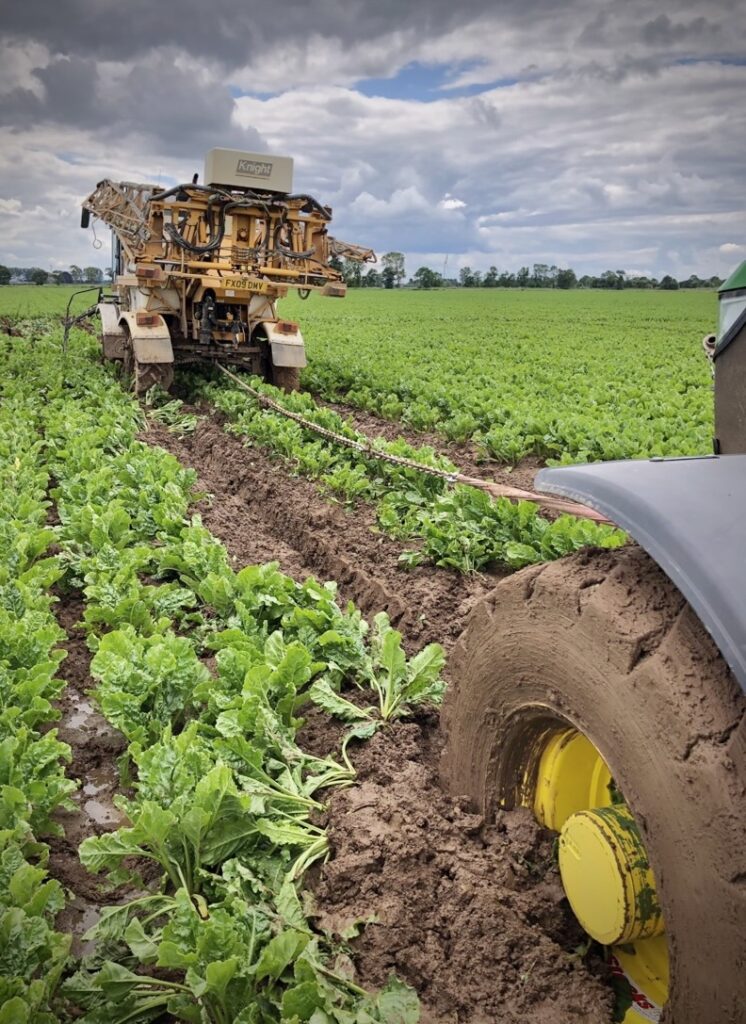
Operationally, equipment can get stuck, requiring expensive recovery operations. There is also an unwanted stress complication too, with farm managers and decision makers needing to work through the complexities that wet conditions can present.
Effective land drainage therefore is not simply about removing visible standing water. It is about creating a more consistent soil environment and increasing the number of opportunities available to work the land in appropriate conditions.
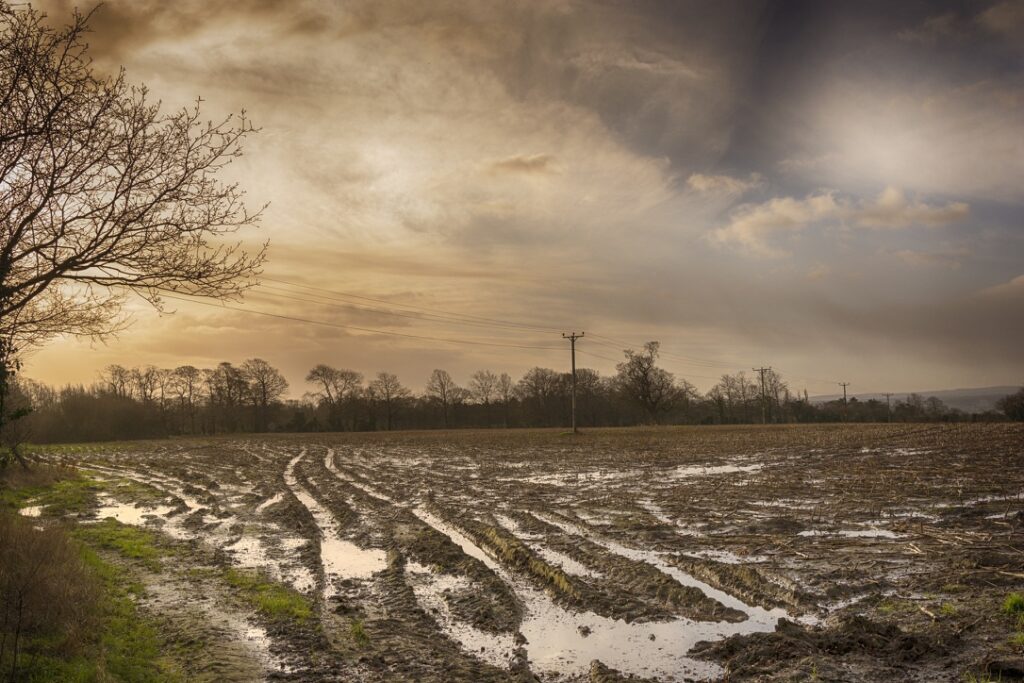
Waterlogged farmland: prolonged saturation can restrict field access, delay operations and increase the risk of soil structural damage.
How can waterlogged farmland be improved?
The correct solution depends upon the cause.
For this reason, William Morfoot Ltd advocates a survey and design-led approach to land drainage rather than simply installing drains where a field appears wet.
Modern GPS and topographical surveying allow field levels, drainage routes and outfalls to be accurately assessed. Existing drainage plans, where available, can be considered alongside information gathered on site to build a clearer picture of how water is behaving across the field.
Depending upon the findings, solutions might include repairing existing drainage, cleaning or improving outfalls, installing new carrier drains, introducing a completely new systematic drainage scheme, or combining pipe drainage with secondary drainage techniques such as moling where appropriate for the soil type. Ditch and watercourse improvement work is also often a critical part of the solution, with the need to get water moving away from problem areas a critical part of the required result.
In some circumstances, existing systems can also be incorporated into a new drainage design rather than being abandoned entirely.
The important point is that the drainage design should respond to the cause of waterlogged farmland, rather than the problem being made to fit a predetermined drainage solution.
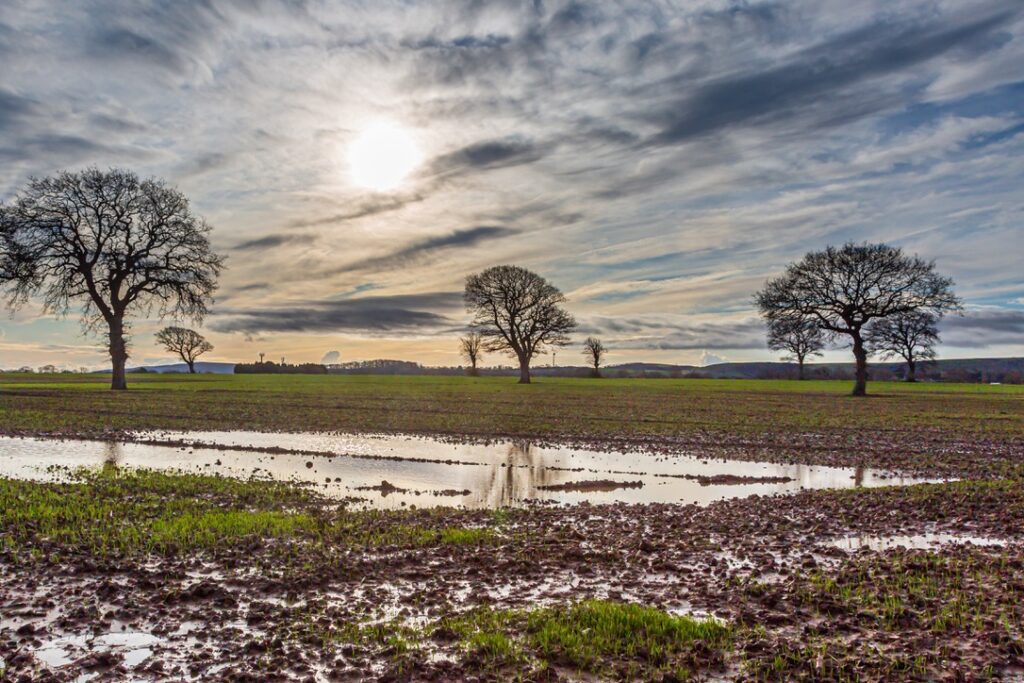
Persistent surface water across a field can indicate a combination of drainage, soil structure and outfall issues that should be assessed before remedial work begins.
The importance of professional land drainage design
Land drainage represents a long-term investment in agricultural land.
A professionally designed and installed system can continue providing benefits for several decades, so decisions about drain spacing, depth, pipe capacity, gradients and outfall arrangements deserve careful consideration.
Technology has transformed this process.
At William Morfoot Ltd, modern GPS surveying, digital drainage design and machine control technology allow us to develop highly accurate drainage plans and transfer those designs directly into the installation process.
This combination of technology and more than six decades of practical land drainage experience allows schemes to be designed around the individual characteristics of each field.
Investing in more resilient farmland
British agriculture is increasingly having to contend with weather extremes. Long dry periods can be followed by intense rainfall events, while prolonged wet winters can place enormous pressure on soils and existing drainage infrastructure.
Farmers cannot control the weather, but they can invest in making their land better equipped to cope with it.

Effective drainage helps surplus water leave the soil more quickly, improves trafficability and provides better conditions for crop establishment and root development. It can also help reduce the risk of serious soil structural damage caused by having to operate machinery when ground conditions remain excessively wet.
For fields suffering from repeated waterlogging, the starting point should therefore be to understand why the problem is occurring.
William Morfoot Ltd provides agricultural drainage surveys, design and installation services throughout the UK. Whether the problem relates to an ageing drainage system, inadequate drainage capacity, damaged infrastructure or a field requiring a completely new drainage scheme, our team can assess the site and develop a practical solution designed for its individual conditions.
If waterlogged farmland is affecting the performance of your land, contact William Morfoot Ltd to discuss a drainage survey and assessment.