
Land reinstatement after construction is the process of restoring land affected by construction activity so that it can return to its previous use and, critically for agricultural land, recover its ability to function as a productive growing medium.
This is particularly important on cross-country pipelines, underground cable routes and utility infrastructure projects, where construction easements can extend for many kilometres across productive farmland.
Good land reinstatement involves considerably more than simply replacing excavated soil and leaving the surface looking level.

How does construction affect agricultural soils?
Healthy agricultural soil has developed its structure over many years. Within that structure are countless small airways, cracks, fissures and cavities which allow water, air and nutrients to move through the soil profile.
These characteristics are fundamental to healthy root development, drainage and crop production.
Construction can dramatically disturb this natural structure. Heavy plant and machinery repeatedly trafficking across the ground can compact soils, while excavation, soil stripping, stockpiling and reinstatement can disrupt the soil profile itself.
There can also be a tendency for soils to slump and settle after they are first reinstated. Soil that has been excavated, stored and subsequently replaced no longer possesses exactly the same structure that it had before construction. As it settles, the reinstated material can become denser and lose some of the natural voids, fissures and pathways through which water would previously have moved.
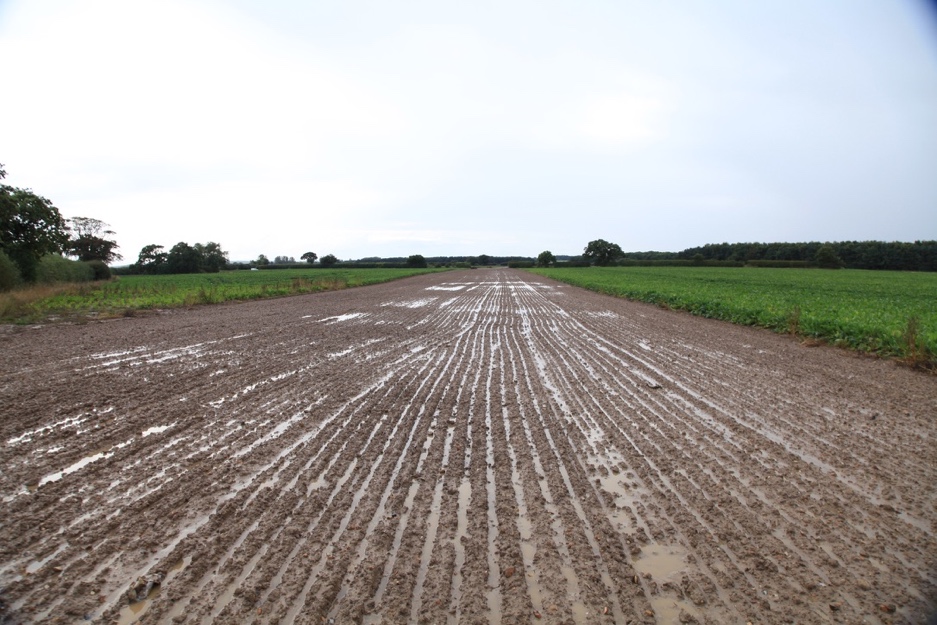
Consequently, land that appears to have been successfully reinstated at the surface may initially behave very differently from the undisturbed soils surrounding it, particularly in terms of drainage and the movement of water through the soil profile. This is one reason why effective land reinstatement needs to be viewed as a process of soil recovery, rather than simply the replacement of excavated material.
The result can be a significant reduction in the soil’s natural drainage characteristics and its ability to support commercial crops.
If these problems are not properly addressed, the effects can extend beyond the immediate construction period. Poor drainage, compaction and damaged soil structure can contribute to reduced crop performance for years afterwards, potentially resulting in ongoing disruption, compensation claims and deteriorating relationships between landowners and asset owners.
Land reinstatement starts before construction
Successful land reinstatement should therefore be considered before construction begins.
The methodology for stripping, handling and storing topsoil and subsoil should be carefully agreed between project owners, contractors, landowners and their representatives.
Different soil horizons should be managed appropriately and unnecessary trafficking of vulnerable soils avoided wherever possible.
When reinstatement begins, stored soils should ideally be handled and replaced during suitable, dry and settled ground conditions. Working soils when conditions are too wet can cause further structural damage and undermine the entire reinstatement process.
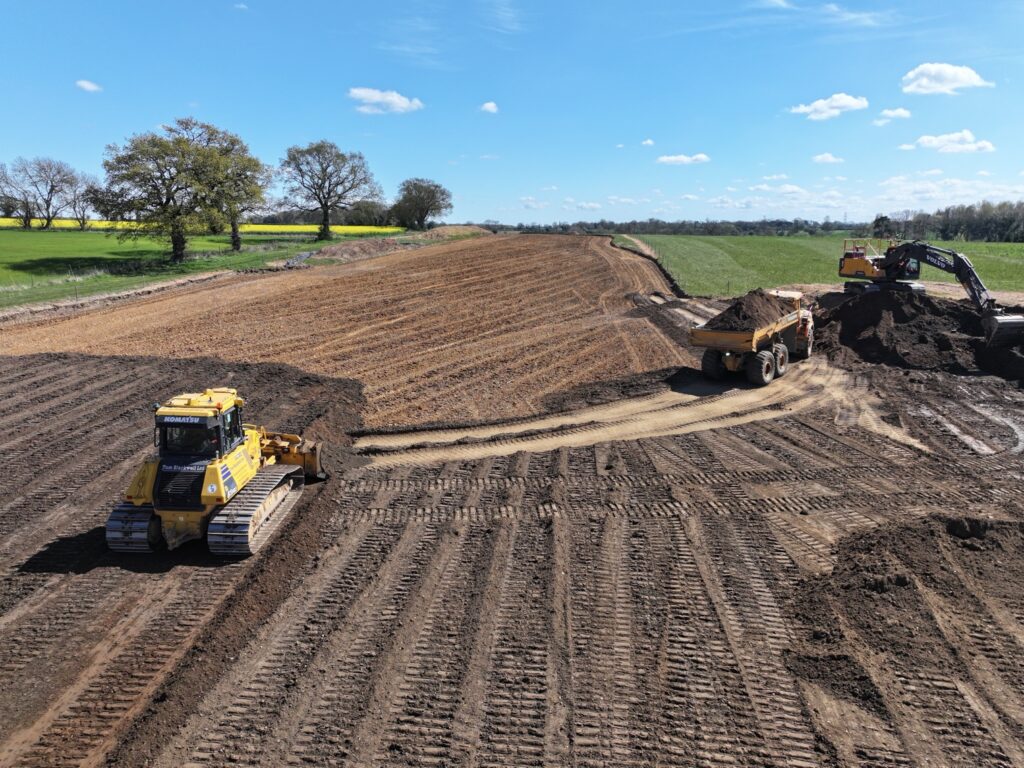
Precision land reinstatement using modern technology
Modern technology can make the reinstatement process significantly more accurate.
GPS-guided specialist equipment can be used to return soil to predetermined levels and profiles, helping ensure that the finished landform corresponds with agreed reinstatement levels and integrates correctly with surrounding land.
However, replacing the soil is only one part of the process.
Construction traffic can create significant compaction within the soil profile. A programme of subsoiling and soil loosening will therefore typically accompany land reinstatement, helping break up compacted layers and encourage the movement of air and water back through the soil.

Why is post-construction land drainage important?
Post-construction land drainage can be another critical component of agricultural land reinstatement.
Existing field drainage systems may have been severed or disrupted during construction, while the physical characteristics of the soil within the construction easement may be fundamentally different from the undisturbed ground alongside it. Soil will typically be tight and compacted when it is first put back.

A carefully designed post-construction drainage system can remove excess water falling on or entering the reinstated easement, helping the disturbed soil recover while reducing the risk of prolonged waterlogging. Where works are close to a watercourse, it is also worth checking whether an environmental permit for flood risk activities is required before any drainage works begin.
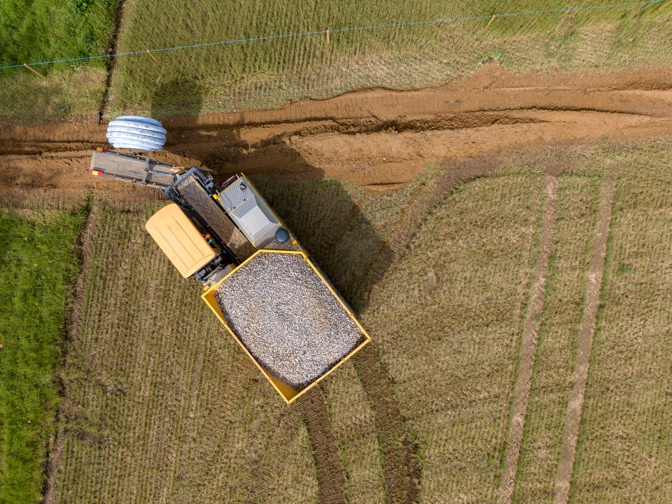
At William Morfoot Ltd, we can survey existing drainage systems and design new drainage around the completed infrastructure, helping reconnect the reinstated land with the wider field drainage network.

Helping soils recover naturally
Even with excellent land reinstatement, soil structure cannot simply be recreated overnight.
The recovery process can be assisted by establishing suitable vegetation or deep-rooting cover crops. Root development helps introduce organic matter and gradually recreate some of the natural channels, fissures and cavities lost during construction.
Combined with effective land drainage and appropriate soil loosening, this gives the reinstated soil the best opportunity to rebuild its structure and return to productive agricultural use.
Getting land reinstatement right
Good land reinstatement should ultimately lead to a smooth and effective handback to the landowner.
Poor reinstatement can achieve precisely the opposite. Compaction, waterlogging, damaged drainage systems and reduced crop performance can become the beginning of months or even years of remedial works, negotiations and compensation claims. Beyond the financial cost, this creates considerable disruption and frustration for landowners, agents, contractors and asset owners alike.
William Morfoot Ltd specialises in land drainage, water management and agricultural land reinstatement associated with major infrastructure projects. Our experience includes cross-country pipelines, underground utility corridors and major onshore cable routes.

The objective of effective land reinstatement is straightforward: construction may temporarily disturb the land, but it should not permanently compromise its ability to drain, recover and produce crops.
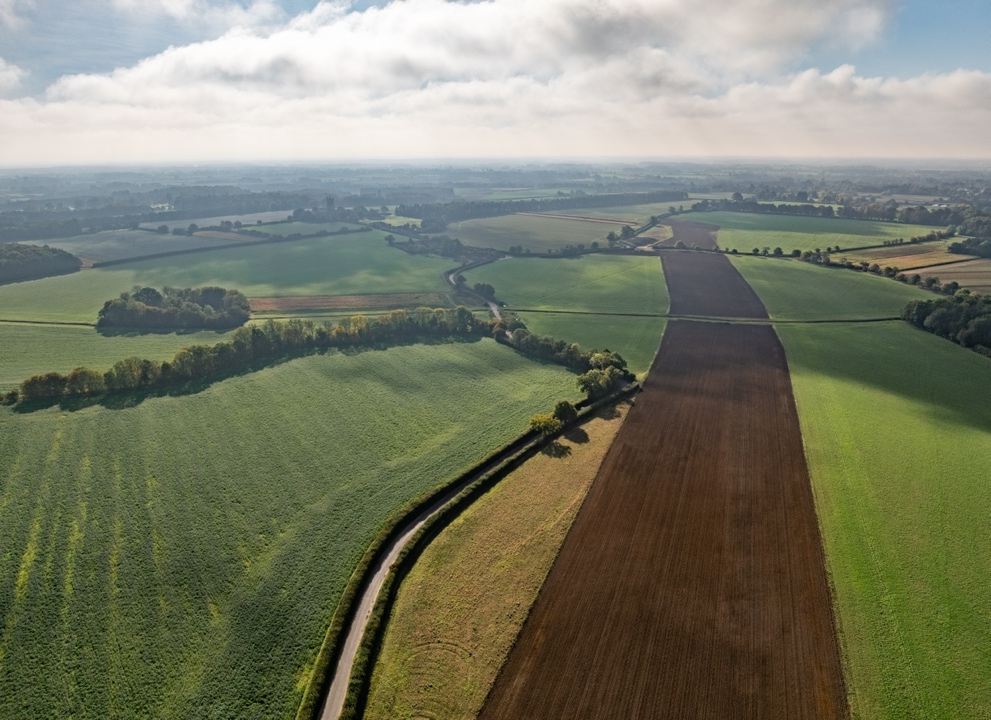
If you have a construction project affecting agricultural land, contact William Morfoot Ltd to discuss land reinstatement and post-construction drainage.