
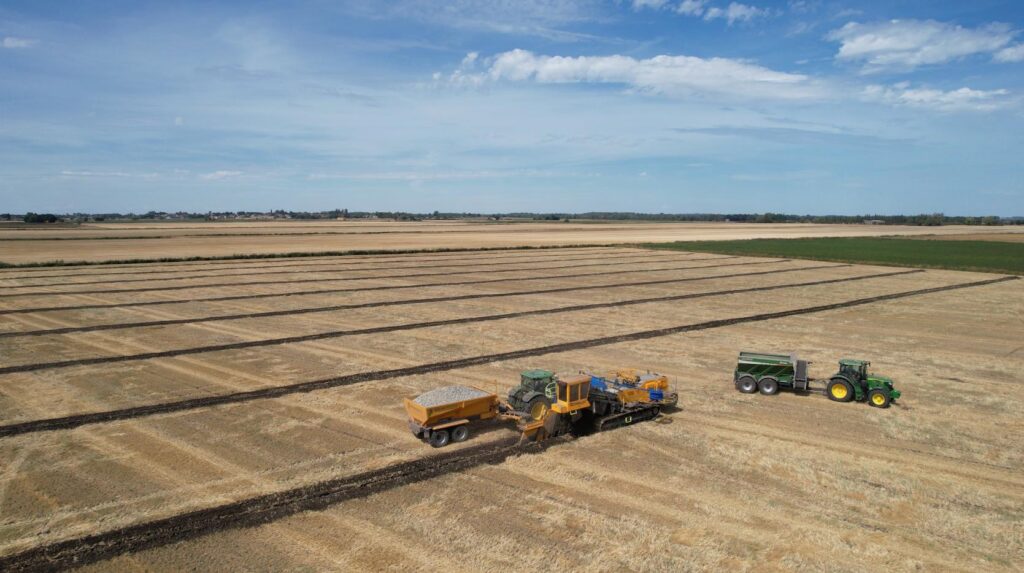
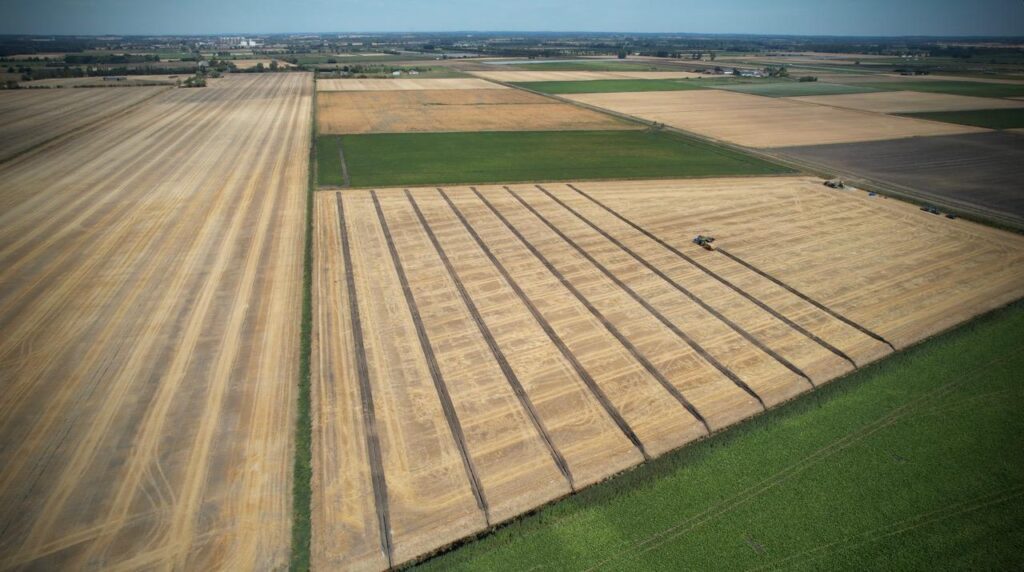
The photographs accompanying this article were taken from our projects being delivered in Eastern England in mid-August 2026, following a prolonged period with virtually no discernible rainfall. The exceptionally dry conditions have been plain to see across the region and, for many farmers and landowners, drought has taken its toll on crop yields.
Agriculture has always been exposed to the weather, but periods such as this provide a particularly stark reminder of just how significant that exposure can be. No matter how well a crop is established or managed, prolonged extremes of weather can have a major influence on its eventual performance.
While there is little that can be done through land drainage to mitigate a severe lack of rainfall, the current drought highlights the wider importance of investing in agricultural land to make crop production more resilient to the other extreme – prolonged periods of excessive rainfall and waterlogged ground.
Preparing for the Other Extreme
After such an extended dry spell, it can seem difficult to contemplate fields becoming too wet. However, British weather has repeatedly demonstrated its ability to move rapidly from one extreme to another.
A meteorological rebound from the exceptionally dry conditions currently being experienced could bring a return to sustained rainfall. Should this coincide with autumn cultivations, drilling, winter cropping or spring fieldwork, poorly drained land can quickly present an entirely different set of challenges.
Saturated soils restrict rooting, reduce soil aeration and can result in uneven crop establishment and development. They also restrict opportunities for machinery to travel, potentially delaying cultivations, drilling, spraying and harvesting at precisely the time when those operations need to be undertaken.
An effective land drainage system helps remove surplus water from the soil profile and provides farmers with a considerably greater opportunity to manage their land when conditions become wet.
Drainage is an Investment in the Land
At William Morfoot Ltd, we have always regarded agricultural land drainage as a long-term capital investment in the productive capability of the land.
A professionally designed and installed drainage scheme is not an investment for a single crop or season. Correctly installed systems can continue delivering benefits for several decades, helping successive cropping rotations and, in many cases, successive generations farming the land.
The benefits extend considerably beyond simply removing standing water. Effective drainage can contribute towards:
- improved and more consistent crop establishment;
- stronger and deeper rooting;
- more uniform crop development across the field;
- improved soil structure and workability;
- increased opportunities for timely field operations;
- reduced areas of underperforming crop; and
- improved and more consistent yield potential.
Perhaps most importantly, drainage helps de-risk crop production from periods of extreme wet weather.
No drainage system can remove the inherent uncertainty of farming. What it can do is address one of the major variables within the landowner’s control by improving the ability of the soil to cope with excessive rainfall.

Investing for Decades, Not Seasons
The drainage work pictured here demonstrates the scale and permanence of that investment. Once installed beneath the field, the system becomes part of the productive infrastructure of the farm, quietly performing its function year after year.
The value of such an investment should therefore be considered over decades rather than against the economics of an individual season.
For landowners looking to improve the long-term productive capacity of their land, this is an important distinction. Better drainage can help produce more uniform crops and better yields, but it can also provide something increasingly valuable in an era of pronounced weather extremes: greater resilience and greater certainty of production.
The drought conditions of summer 2026 are a powerful reminder that farmers cannot control the weather. What they can do is invest in their land so that it is better equipped to deal with the extremes when they arrive.
With the possibility that today’s exceptionally dry conditions could eventually give way to a period of sustained wet weather, now is an appropriate time for farmers and landowners to consider whether their existing drainage infrastructure is capable of providing the protection their land requires.


William Morfoot Ltd has been designing and installing agricultural land drainage systems across the UK for generations. To discuss the drainage requirements of your land or the potential benefits of a new or upgraded drainage scheme, please contact our team.