
After one of the driest and hottest summers on record, the rain has finally returned.
During recent days, storms have delivered the first really significant rainfall seen across many parts of England for several months. In places, 20–30mm of rain has fallen within just a few hours, with considerably higher totals possible where thunderstorms have repeatedly tracked across the same locations.
For farmers and landowners who have spent much of the summer looking anxiously at drought-stressed crops and exceptionally dry soils, the change in weather will undoubtedly be welcome.
But it also serves as a timely reminder of just how quickly the challenges facing UK agriculture can change.
From one extreme to another
The statistics from this summer have been remarkable.
July 2026 was officially the driest July recorded in England since records began in 1836, with just 6.5mm of rainfall – around 10% of the long-term average. In some parts of southern England, virtually no rain fell at all.
By late August, 71% of England by land area remained officially classified as being in drought.
Yet despite these conditions, the return of heavy rainfall has already resulted in flood alerts being issued across the country.
The Environment Agency makes the important point that flooding can occur during a drought. After prolonged dry weather, baked and compacted soils can have a limited ability to absorb sudden heavy rainfall, allowing large quantities of water to move rapidly across the surface.
For agriculture, it demonstrates the difficulty of managing land in an increasingly volatile climate.
What could autumn and winter bring in the UK?
There is another important factor developing in the global climate system.
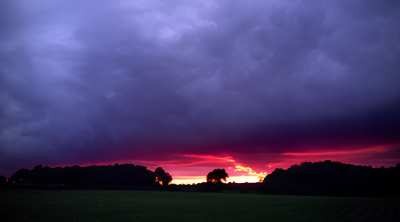
The Met Office has described the El Niño developing during 2026 as “unprecedented”, with forecasts suggesting it could become the largest event in living memory.
While El Niño begins thousands of miles away in the tropical Pacific, its influence can extend around the world. For the UK, the Met Office says its development is expected to increase the chances of wetter and stormier conditions across north-west Europe, including the UK, during the coming autumn and early winter.
That does not guarantee a wet winter. Long-range weather forecasting inevitably carries uncertainty.
But after an extraordinarily dry summer, the prospect of a rapid transition towards wetter and more unsettled weather should certainly focus attention on the resilience of our farmland.
Drainage is about managing risk
At William Morfoot, we have long argued that investment in agricultural land drainage should not simply be viewed as a response to a wet year.
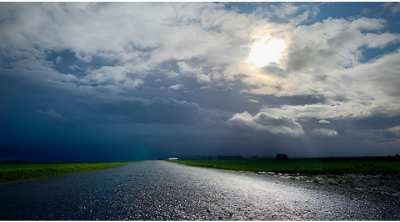
It is an investment in the long-term resilience and productive capacity of the land.
We cannot control whether next season brings drought, prolonged rainfall or – increasingly – both extremes within a relatively short period.
What farmers can control is how effectively their land responds when the rain arrives.
A properly designed and maintained land drainage system allows excess water to move efficiently through the soil profile and away from the field. This helps reduce prolonged waterlogging, protects soil structure and creates more consistent conditions for crop establishment and root development.
Just as importantly, well-drained land can significantly improve the opportunities to travel and undertake cultivations during increasingly narrow weather windows.
When 20 or 30mm of rain arrives in a matter of hours, the difference between land with an effective drainage system and land without one can become very apparent.
Preparing for increasingly unpredictable weather
Perhaps the biggest lesson from 2026 is that UK agriculture needs to become increasingly resilient to weather variability, rather than preparing exclusively for either drought or flooding.
This summer has demonstrated the enormous challenges created by prolonged heat and lack of rainfall. The coming months may remind us just as quickly of the problems associated with having too much water.
Neither extreme is new to British agriculture. What is changing is the frequency, intensity and unpredictability with which these conditions can occur.
Land drainage cannot solve every challenge presented by the weather. But it remains one of the few long-term infrastructure investments farmers can make which directly improves their ability to manage periods of excessive rainfall.
With professionally designed drainage schemes capable of continuing to perform for several decades, the benefits extend far beyond the season in which the investment is made.
After months of asking when it would finally rain, the answer appears to have arrived.
The next question for farmers and landowners is increasingly simple:
When the rain does come, is your land ready to deal with it?
William Morfoot Ltd has specialised in agricultural land drainage and water management since 1962. Our team provides GPS surveying, drainage design and installation services to farmers and landowners throughout the UK.