
We are delighted to have recently completed a major lake construction project for a private client, helping to transform part of the landscape into a carefully engineered water feature designed to support both practical water management and long-term biodiversity.
The project expanded an existing network of ponds and water features across the landholding, with the new lake designed to integrate naturally into the surrounding environment while creating new opportunities for wildlife to thrive.
One of the most technically important aspects of the project involved the creation of a bespoke water management system. A practical and sustainable solution was developed to both fill the lake and maintain consistent water levels throughout the year. This included the design and installation of a new pipe network to provide a regular flow of water into the lake, alongside an overflow control system to regulate water height during changing weather conditions.

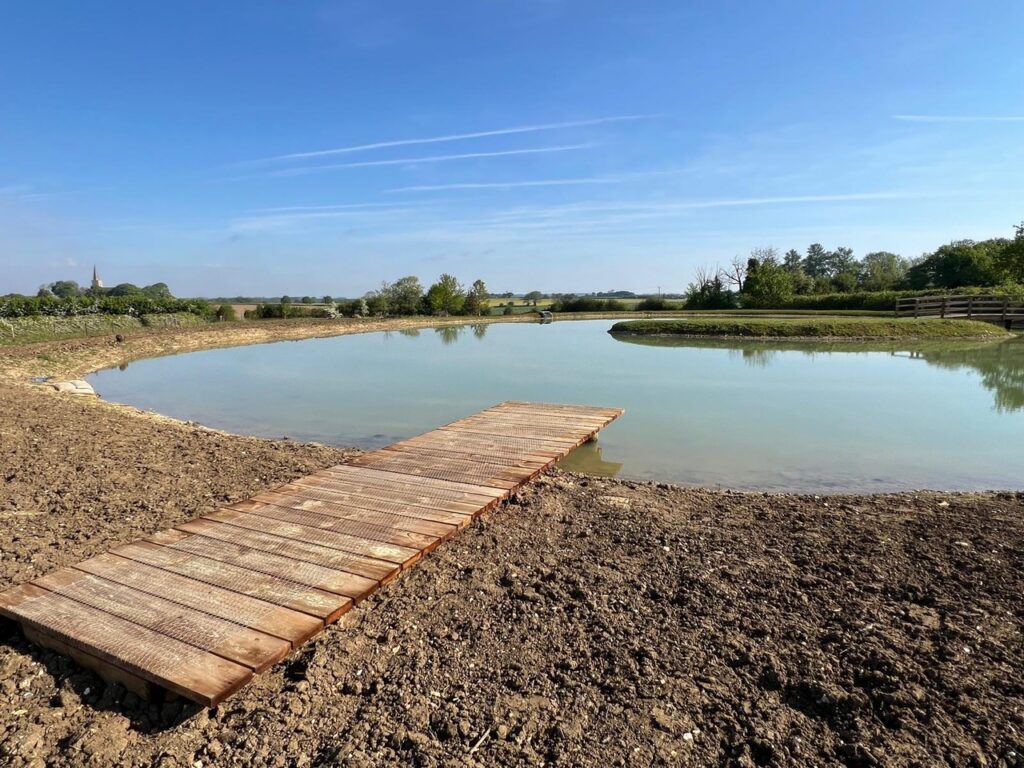
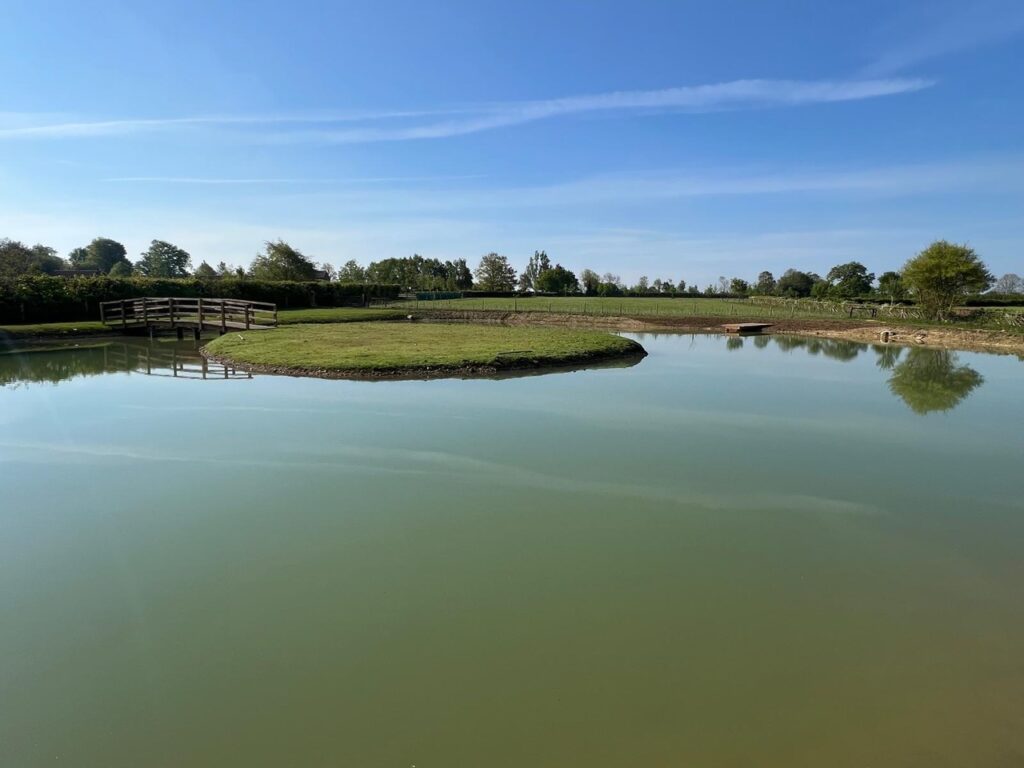
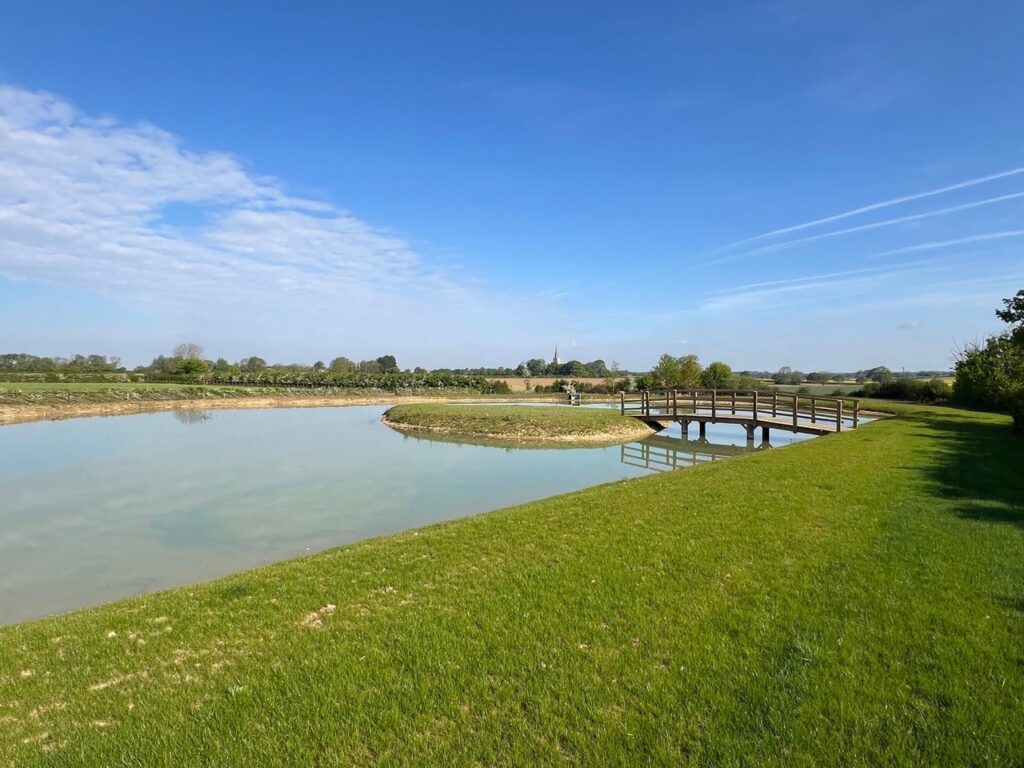
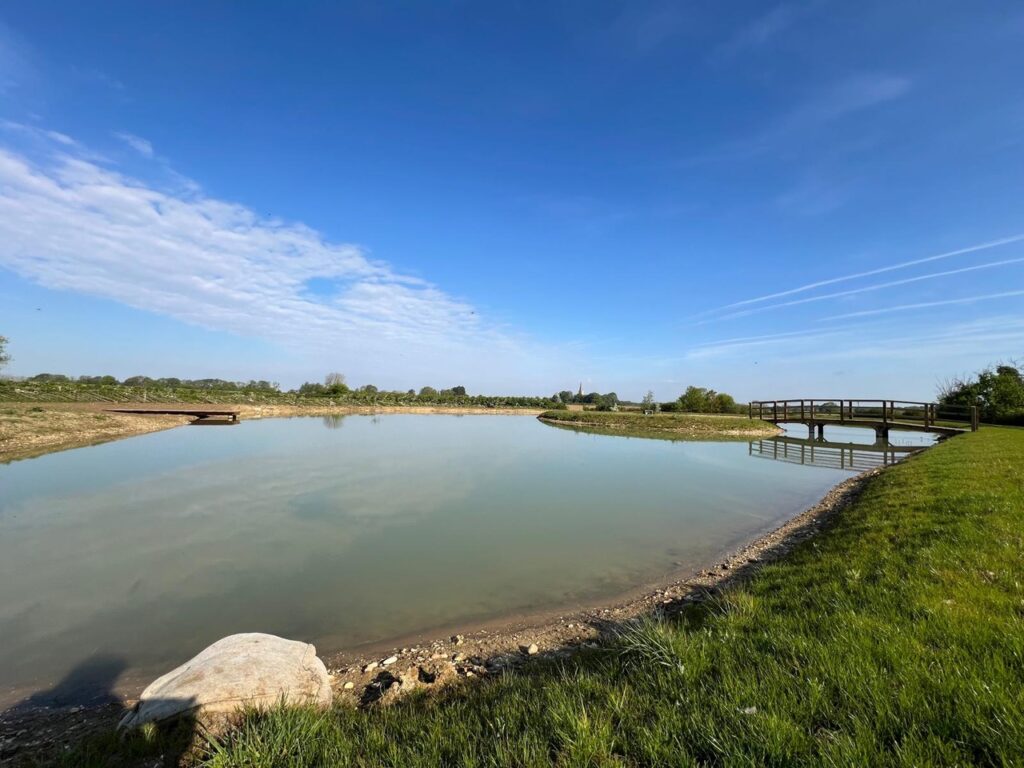
To ensure the most effective solution was developed for the site, our in-house surveying team carried out a detailed topographical survey of the surrounding terrain and existing ditch systems. The survey enabled accurate analysis of land levels, gradients and water flow paths, ensuring the final design worked in harmony with the natural landscape.
Supporting wildlife and encouraging biodiversity were also central to the project brief. To help create a safe nesting environment for local birdlife, the lake was designed with a dedicated island sanctuary positioned centrally within the waterbody, offering protection from predators and disturbance.
As part of the wider scheme, a new bridge was also constructed to provide future access to the island for maintenance and environmental management purposes. Native aquatic planting is planned around and within the lake, while the owner also aims to encourage the natural regeneration of flora and fauna throughout the area.
This project demonstrates how carefully planned civil engineering and environmental works can successfully combine practical infrastructure, sustainable water management and ecological enhancement within a sensitive rural setting.