
Land drainage for renewable energy developments is becoming an increasingly important consideration. The UK’s transition towards renewable energy is creating an unprecedented amount of new infrastructure across the countryside. Offshore wind farms require extensive onshore cable routes. Solar farms occupy increasingly large areas of agricultural land. New substations, battery storage facilities and associated grid connections can all alter existing patterns of land drainage too.
For project owners and principal contractors, land drainage should never be treated simply as a reinstatement issue at the end of construction. It needs to be understood, surveyed and designed into a project from the outset.
At William Morfoot Ltd, we have extensive experience delivering specialist land drainage and water management solutions on major infrastructure and renewable energy projects. That experience has repeatedly demonstrated one important principle. Getting drainage right at the beginning is invariably easier and more cost-effective than trying to rectify problems afterwards.

Why drainage matters on renewable energy projects
Agricultural land contains a complex network of natural and man-made water pathways. Existing field drains may have performed successfully for decades, carrying surplus water towards ditches, watercourses and other outfalls.
Construction can fundamentally alter this environment.
Excavating cable trenches, stripping and replacing topsoil and subsoil, and constructing haul roads and compounds can all affect soil structure. Repeatedly trafficking the land with heavy machinery changes the way water moves through it too.
This means we cannot consider drainage independently from the wider construction process.

Where existing drains cross a construction corridor, we may need to intercept them before construction begins. We may also need temporary drainage to prevent water entering excavations and to maintain drainage for adjoining land throughout the works. Depending on the watercourses affected, this may also require consent under land drainage byelaws or an environmental permit from the Environment Agency.
Once construction is complete, the challenge becomes greater still: how do you reinstate effective drainage across land which has itself been disturbed?
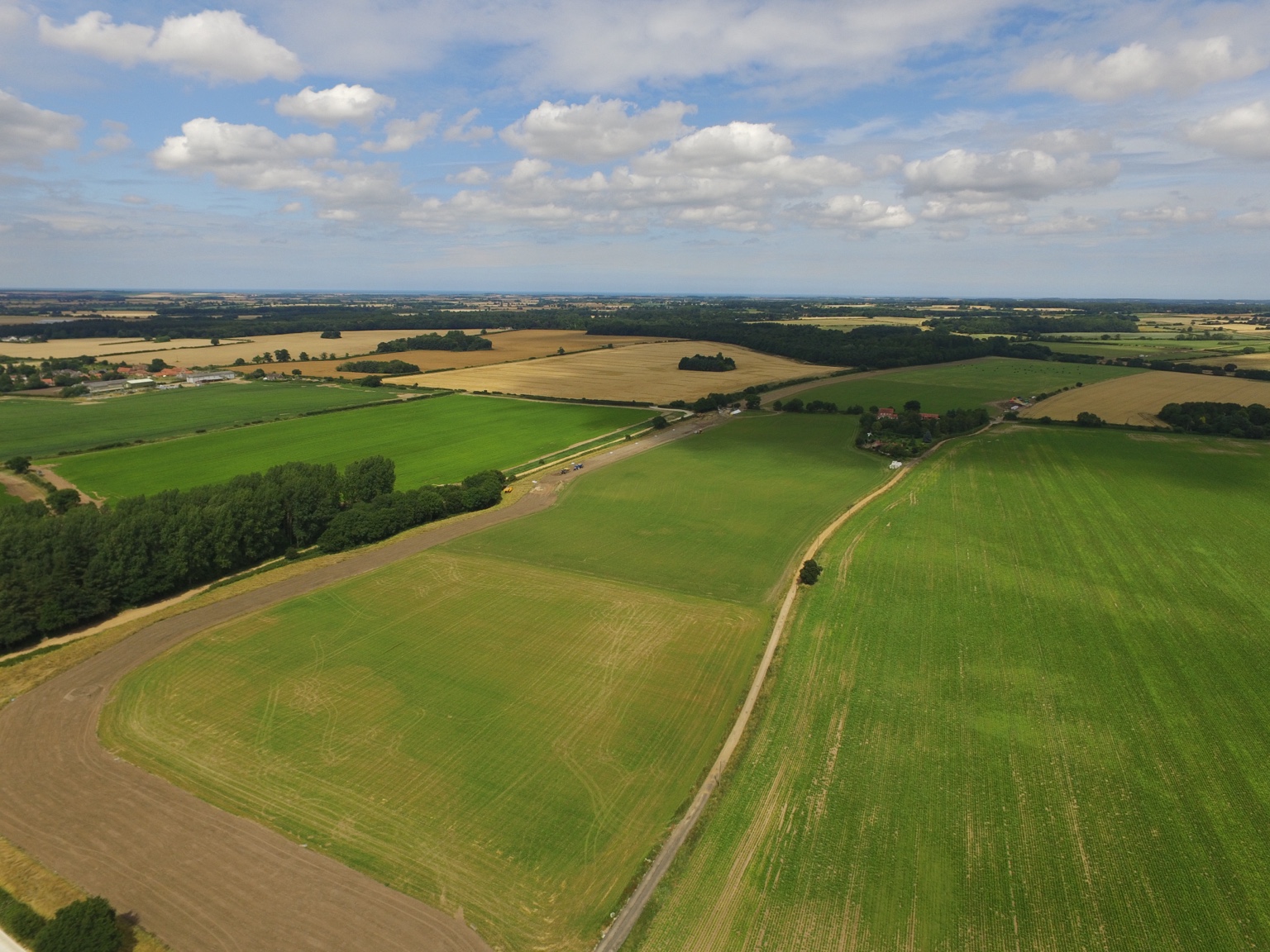
The problem with a strict like-for-like approach
One recurring issue on infrastructure projects is the fear of betterment.
Project owners can understandably be reluctant to undertake work which might leave a landowner with something perceived to be better than existed beforehand. This can lead to drainage specifications being driven by the principle of replacing only what was demonstrably present before construction.
On paper, that can appear reasonable. In practice, agricultural land drainage is rarely that simple.
A cable route may sever existing drains at multiple locations. Historical drainage records can be incomplete or inaccurate. Old systems may have been altered over many decades, and individual drains do not necessarily follow the routes shown on historic plans.
More fundamentally, the soil through which the replacement drainage must operate is no longer the same soil environment that existed before construction.
Excavation breaks up the existing soil profile. Construction removes, stores and replaces soil horizons. Construction traffic can cause compaction, while trenching and reinstatement can change established pathways through which water previously travelled.
Simply replacing an existing pipe on a theoretical like-for-like basis therefore does not necessarily reinstate the drainage performance that existed beforehand.
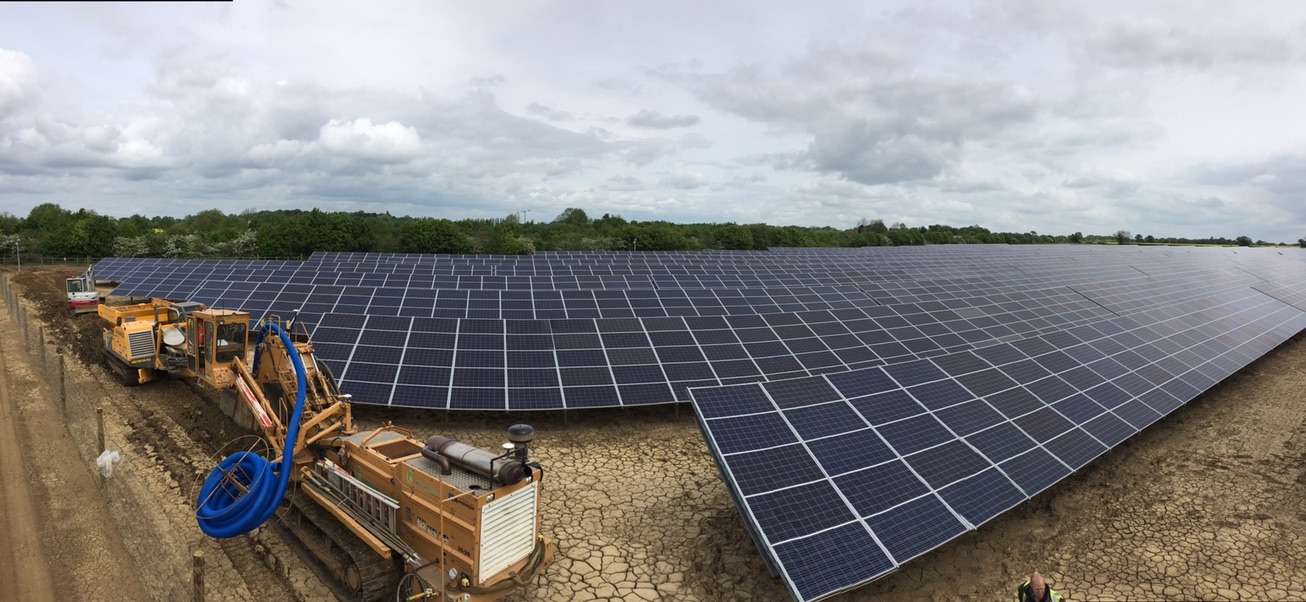
Sometimes land drainage for renewable energy developments is needed where none existed before
This is an especially important consideration.
A pre-construction survey may identify an area with no existing land drains. It can therefore be tempting to conclude that no post-construction drainage should be required.
But that overlooks the impact of construction itself.
If previously undisturbed agricultural soil has been excavated, trafficked or compacted, its drainage characteristics may have changed. In some circumstances, new drainage can be necessary precisely because construction has created a drainage requirement that did not previously exist.
We should not automatically regard that as unnecessary betterment. The objective should instead be to restore the land to an appropriate level of functionality. The project should not leave behind a long-term water management problem.
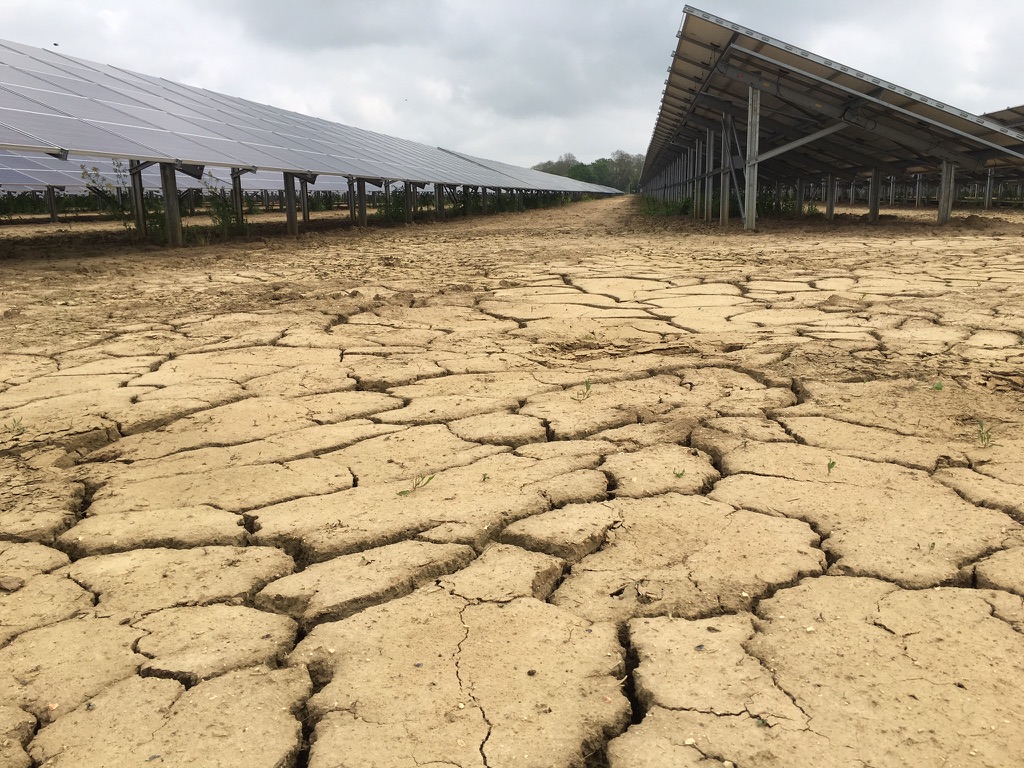
What happens when corners are cut?
Attempting to minimise drainage expenditure can create significantly greater costs later.
Inadequate drainage reinstatement may result in persistent wet areas, reduced crop performance and difficult field access. It can also cause soil deterioration and problems extending beyond the immediate construction corridor.
For the landowner, those consequences can continue for years. For the project owner, they can translate into ongoing complaints, compensation claims, repeated remedial works and damaged relationships with landowners and their agents.
Perhaps most frustratingly, many of these problems are avoidable.
Once a project has demobilised, returning to investigate and repair drainage is invariably more complicated. It is far simpler to deliver the right solution while specialist contractors, machinery and project infrastructure are still on site.
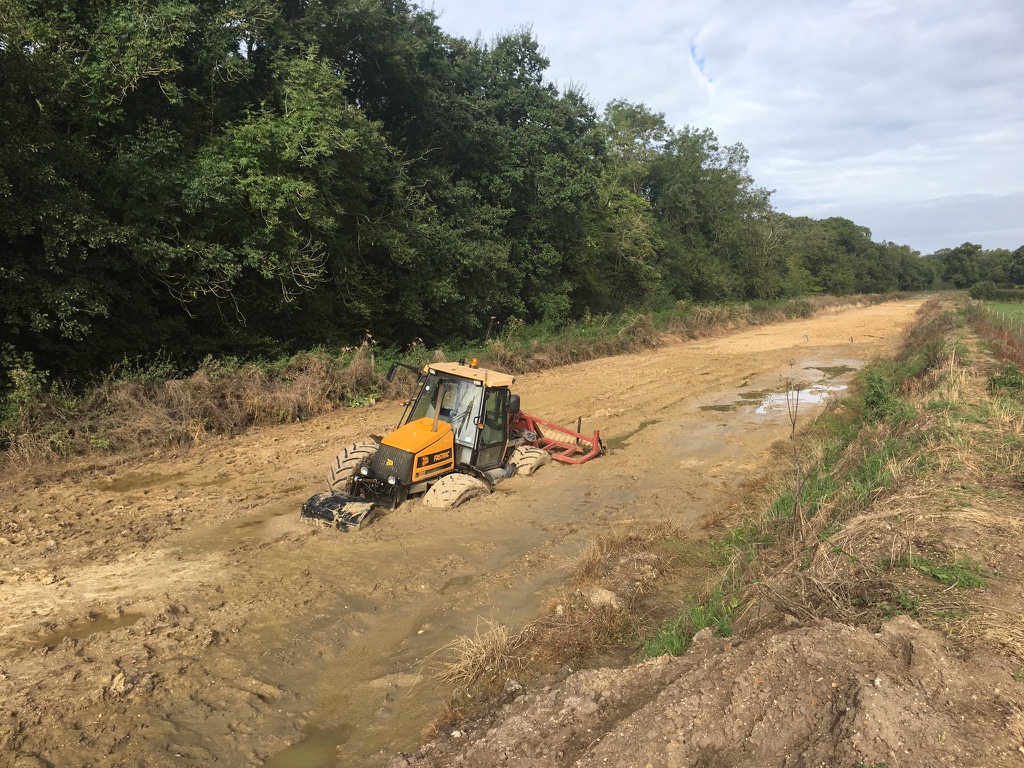
Start with survey and design
Good drainage outcomes begin long before the first cable trench is excavated.
We should investigate and map existing drainage during the pre-construction phase, alongside accurate topographical surveying and assessment of ditches, watercourses and available outfalls.
This information allows us to develop a drainage strategy around the proposed construction methodology.
We can then install pre-construction drainage where required, to intercept existing systems, control incoming water and maintain drainage to surrounding agricultural land.
Just as importantly, the information gathered provides the foundation for an effective post-construction land drainage design.
Post-construction proposals should consider not only what existed before. They also need to reflect what has happened to the soil during construction, and how water will move through the reinstated landscape.
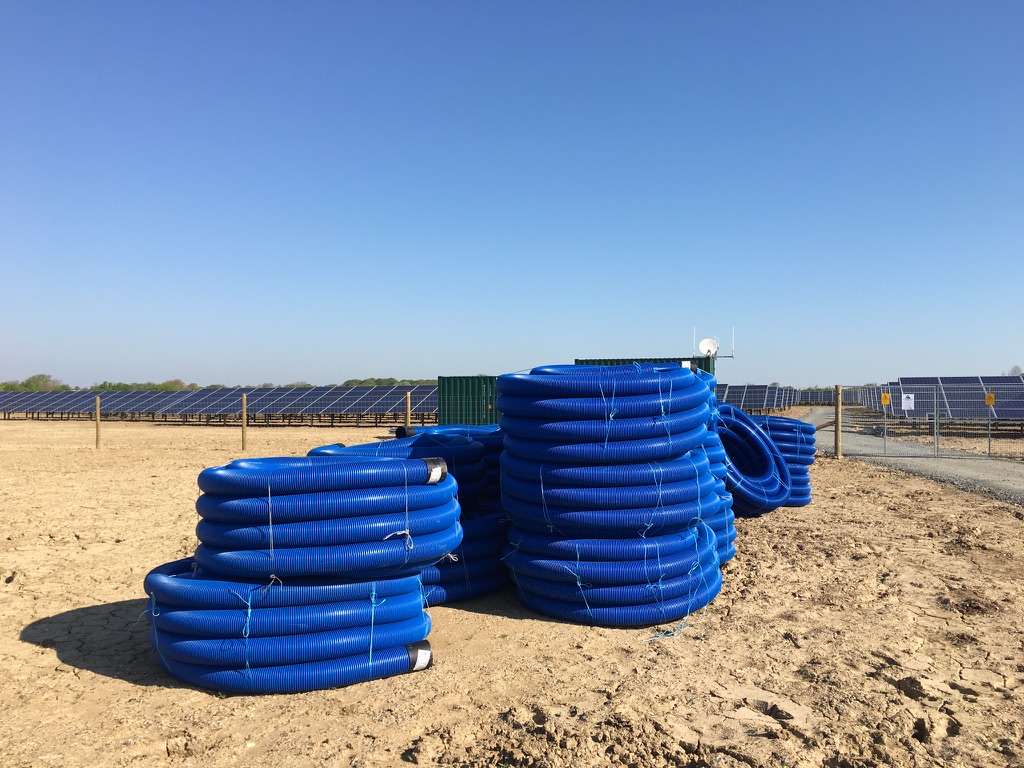
Land drainage for renewable energy developments is part of successful land reinstatement
Renewable energy infrastructure is intended to deliver benefits for decades. The land through which that infrastructure passes must continue functioning for decades too.
Developers, principal contractors, landowners, land agents and specialist drainage contractors achieve the best outcomes when they engage early. Recognising drainage as an integral component of project design from the outset makes the difference.
This does not mean installing unnecessary drainage or providing unjustified betterment.
It means designing a proportionate, technically appropriate system. That system should reflect both the pre-construction condition of the land and the consequences of the construction activity itself.
That distinction is important.
A narrow focus on replacing the minimum possible drainage can ultimately leave the land in a worse condition than before the project began. That is bad for the landowner, bad for relationships and, ultimately, bad for the project.

Specialist land drainage for renewable energy developments
William Morfoot Ltd provides specialist land drainage for renewable energy developments, covering both pre-construction and post-construction phases, alongside major infrastructure projects throughout the UK.
Our experience encompasses agricultural land drainage associated with major cable routes and renewable energy developments. We combine detailed surveying and design with specialist drainage machinery and experienced site teams.
Getting land drainage for renewable energy developments right at project outset should be a priority for every stakeholder.
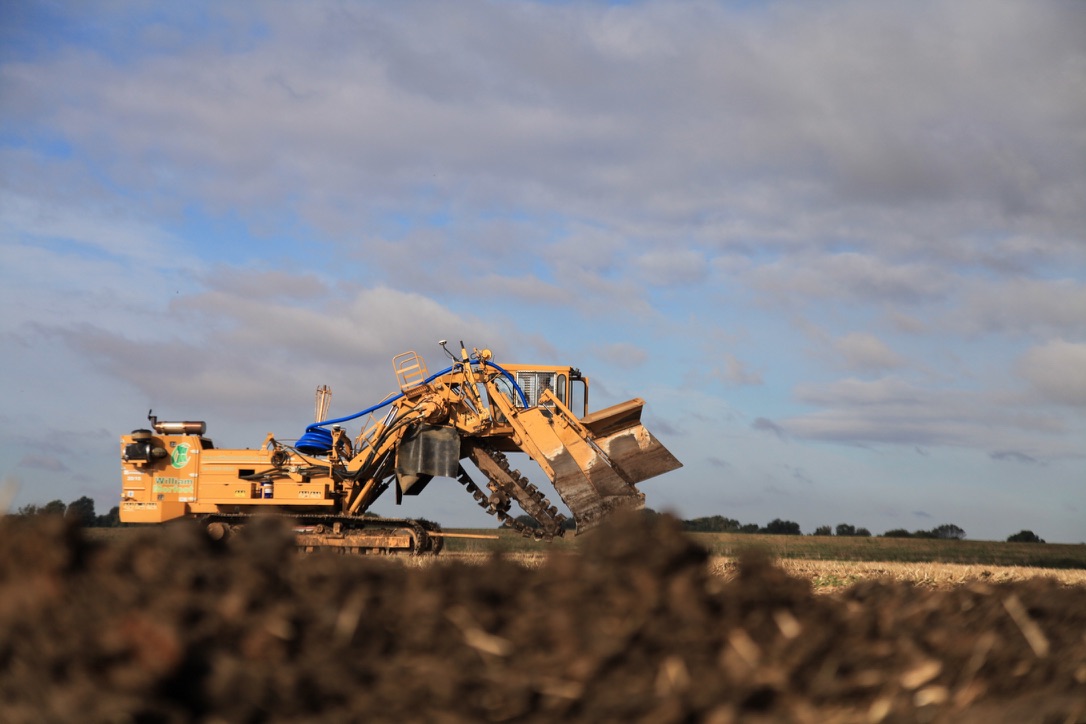
When drainage is properly considered from the beginning, it protects the land and reduces future liabilities. It also helps ensure that renewable energy infrastructure leaves behind a positive long-term legacy.
Contact William Morfoot Ltd to discuss land drainage requirements for renewable energy, cable route or major infrastructure projects.