
A wheat crop just one week from harvest is demonstrating how modern land drainage can do far more than simply remove excess water from agricultural land.

As harvest approaches, William Morfoot Ltd has been revisiting one of a number of fields where the company installed a new land drainage system several years ago. At first glance, the crop stands out simply because of its exceptional appearance. However, the real story lies beneath the surface.
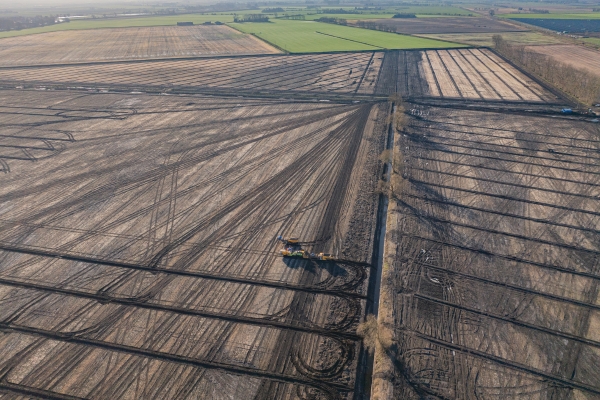

The field forms part of a wider water management system where the same network of land drainage pipes performs two distinct roles throughout the year.
During the autumn and winter months, the drainage system functions exactly as expected, removing excess water from the soil profile to improve soil conditions, encourage healthy root development and allow farming operations to continue during wetter periods.
However, during the growing season, the system is capable of doing the exact opposite.
Using controlled water management techniques, water can be reintroduced through the existing drainage network, raising moisture back into the crop’s root zone from below. The approach effectively transforms the drainage system into a highly efficient sub-irrigation network, making use of the same infrastructure for two completely different purposes.
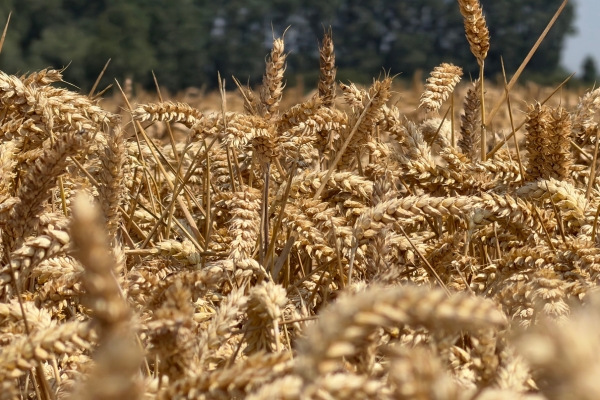
This capability has proved particularly valuable during the exceptionally dry conditions experienced throughout 2026.
Unlike conventional overhead irrigation, sub-irrigation delivers water directly into the soil profile where it is needed most. This significantly reduces the airborne losses associated with evaporation and wind drift while making far more efficient use of available water. In many situations, it can also offer a more cost-effective solution than traditional irrigation methods.
With the crop now only around a week away from harvest, attention will soon turn to the combine’s yield monitor to see whether the impressive visual appearance is reflected in the final harvested yield.
Early indications are certainly encouraging, with the field currently looking amongst the strongest blocks of wheat across the farm.
As farming continues to face the challenge of increasingly unpredictable weather patterns, projects such as this demonstrate how modern water management can help businesses respond to both extremes of the climate.
Rather than viewing drainage solely as a means of removing water, integrated water management systems are enabling farmers to retain, manage and reuse water when crops need it most. It is an approach that supports healthier soils, improves water use efficiency and helps build greater resilience for the future.
This working example demonstrates that the future of agricultural water management lies not simply in taking water away, but in managing every drop as effectively as possible.