A key part of the project involved installing new water control sluices and a large underground pipe to transfer fresh water from Bones Marsh, allowing controlled flooding of Quarles Marsh. The careful management of water levels was further refined by damming selected ditches and re-profiling 5.5 miles of existing water channels, ensuring water was evenly distributed across the landscape.
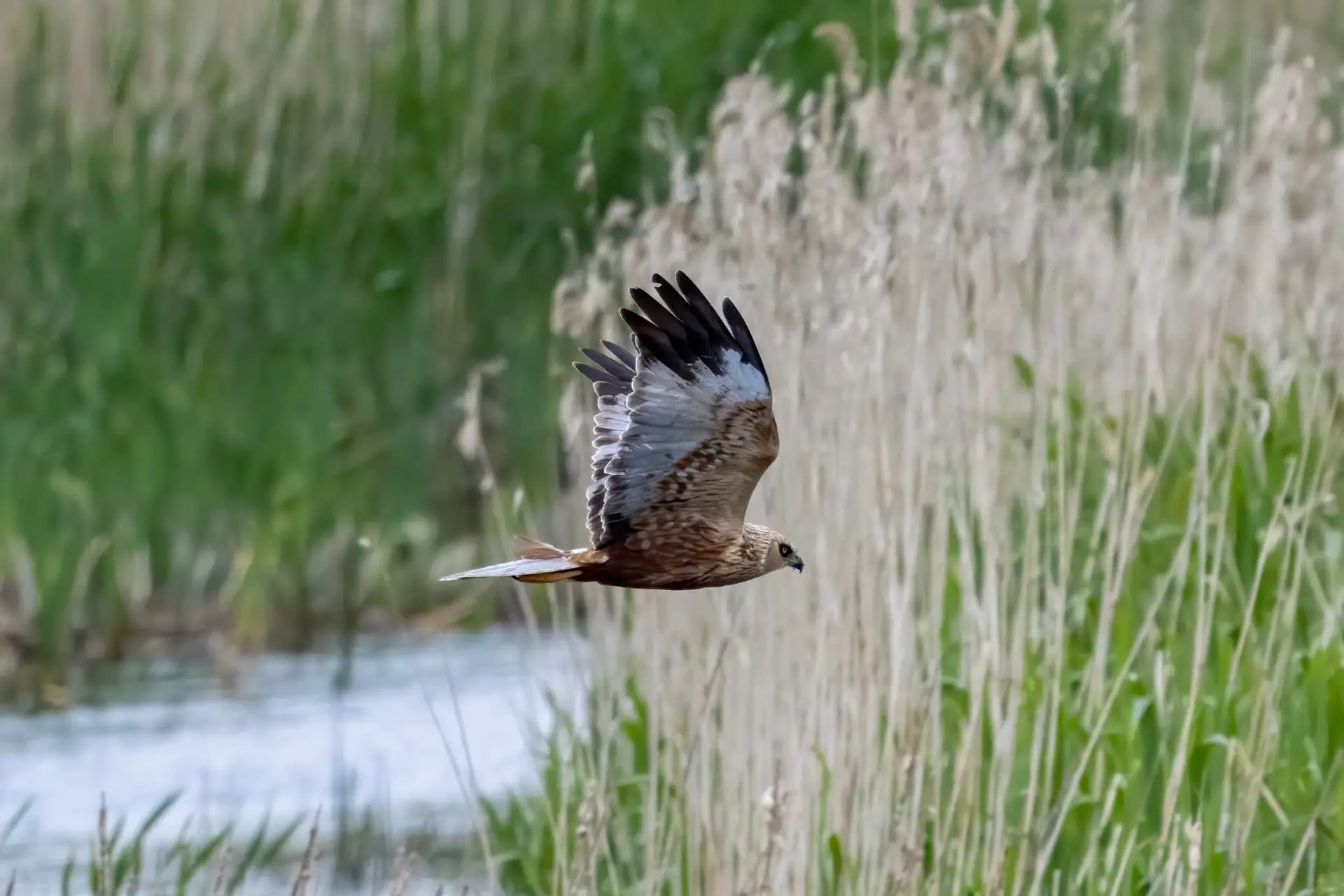
Stretching from Burnham Overy Staithe to Blakeney, the Holkham reserve is one of the UK’s most extensive nature reserves, home to a mosaic of salt and freshwater marshes, sand dunes, pine woodlands, and grazing pastures. The newly created wetland blends seamlessly into this landscape, offering a safe haven for avocets, terns, shovelers, and marsh harriers.
With the new wetland now fully established, birdlife has flocked to the area, further strengthening Holkham’s reputation as a world-class nature reserve. By enhancing and expanding this delicate ecosystem, we are helping to ensure that future generations can continue to witness the incredible biodiversity of Norfolk’s coastline.
Fresh water is now flowing through 5.5 miles of re-profiled ditches, creating the perfect conditions for wildlife to thrive.